Law
What Loper Bright Means for Federal Regulation, Two Years On
The end of Chevron deference shifted interpretive power from agencies to courts — and the emerging case law shows both continuity and real change.
Aleksandr Komarov · July 27, 2026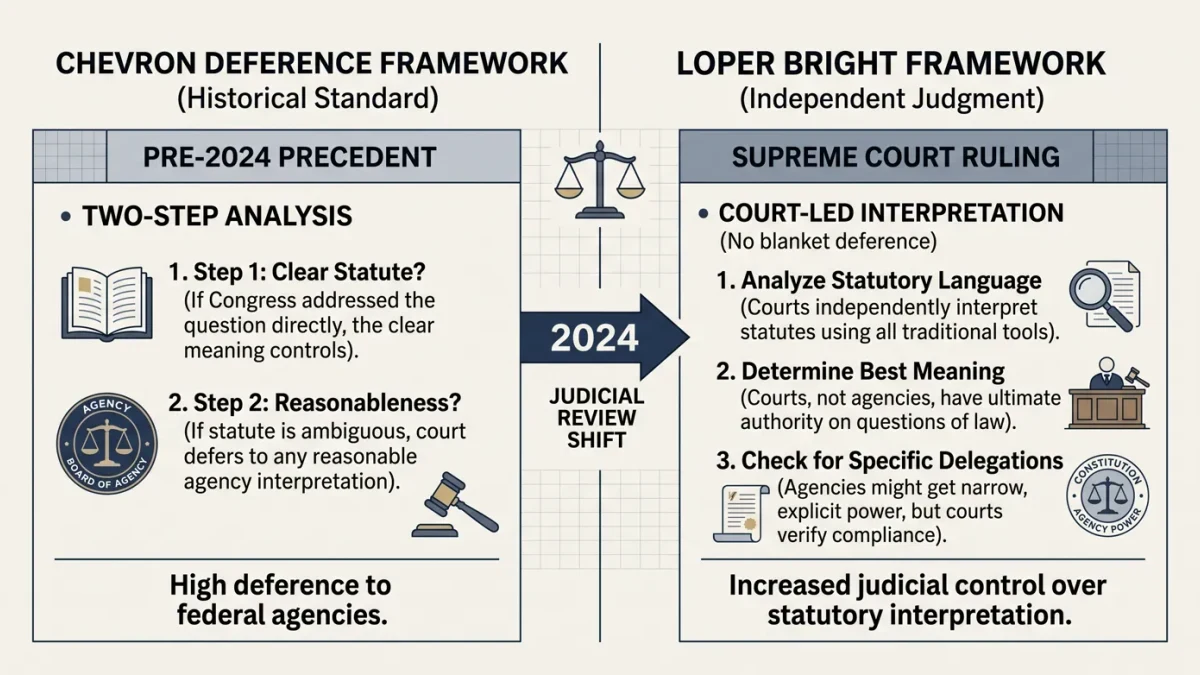
Law covers judgments, statutes and enforcement actions with attention to their operative effect: the parties bound, the date of application, the reasoning available for appeal and the precedent set. Areas include administrative, competition, employment and constitutional questions touching economic activity. Written for lawyers and for non-lawyers who must comply.
The end of Chevron deference shifted interpretive power from agencies to courts — and the emerging case law shows both continuity and real change.
Aleksandr Komarov · July 27, 2026A preliminary injunction freezes a policy while litigation runs, on a four-factor test — and since 2025 the scope of who can get one has narrowed.
Aleksandr Komarov · July 18, 2026
Chapter 11 is not liquidation — it is a court-supervised negotiation that lets a business keep operating while creditors fight over the reorganized pie.
Aleksandr Komarov · June 25, 2026
A grand jury decides whether prosecutors have enough evidence to charge — 23 citizens, secret proceedings, and a historical shield that critics say has become a rubber stamp.
Aleksandr Komarov · June 7, 2026
The Freedom of Information Act gives anyone the right to request federal agency records — with a response deadline of 20 business days and nine carve-outs.
Aleksandr Komarov · May 20, 2026